
Prostate Cancer Screening · Kuala Lumpur, Malaysia
Informed prostate screening, calibrated to your individual risk.
Confidential prostate cancer screening at Hisential Clinics. MMC-registered doctors, PSA testing, digital rectal exam, structured risk assessment, and coordinated referral for further evaluation when indicated. Same-day appointments.
Prostate cancer is highly treatable when detected early - and screening is a personal decision shaped by individual risk.
- MMC-registered doctors
- KKM Licensed Clinic
- 4.9 · 750+ reviews
- Bangsar Shopping Centre
- 10am-8pm daily
- Personal health concierge

Quick Answer
Prostate cancer is one of the most common cancers diagnosed in men over 50, but is also one of the most treatable when detected early.1 At Hisential Clinics, our MMC-registered medical team provide structured screening including PSA testing, digital rectal exam, and individual risk assessment - with coordinated referral for further evaluation when indicated.
Verified by our medical team · Last reviewed 15 May 2026 · Next review 11 Nov 2026
Related conditions: BPH & Enlarged Prostate Treatment in Malaysia, Prostatitis Treatment in Malaysia, and Comprehensive Health Screening in Malaysia.
Book a confidential evaluation
Same-day appointments at Hisential Clinics. WhatsApp or message us - your Personal Health Concierge confirms within hours.
Consultation & structured screening
Detailed history, digital rectal exam, PSA blood test, and individualised risk assessment - all completed at the first visit.
Personalised plan & ongoing care
Results discussed in plain language. Ongoing monitoring scheduled, or coordinated referral to specialist urology if indicated.

Screening options at a glance
Self-check
Is prostate screening right for you?
A confidential, 30-second self-check. Tick any that apply. Screening is appropriate to discuss for anyone ticking one or more. Your responses stay on this device only.
This is not a clinical screening recommendation. Decisions about prostate cancer screening are individual and should be made in discussion with an MMC-registered doctor.
Why people choose Hisential
Same-day appointments
Confidential evaluation with same-day scheduling. PSA, DRE, and individualised risk discussion at the first visit.
MMC-registered doctors
Focused experience in andrology, men's health, and prostate evaluation. Shared decision-making, not protocol-driven.
Confidential by design
Discreet booking, encrypted records, no external reporting without consent.
Coordinated end-to-end care
Your personal health concierge schedules ongoing monitoring, manages results delivery, and coordinates across specialties when referral is needed.
Prostate cancer is the most common cancer diagnosed in men in many countries, including Malaysia.1 It's also one of the most treatable when detected early - 5-year survival rates exceed 95% for localised disease,2 dropping significantly only for metastatic disease.
The clinical paradox of prostate cancer screening is that most prostate cancers grow very slowly, and many would never become clinically significant within a man's lifetime. This means screening can:
- Detect aggressive cancers early, when treatment is most effective - clear clinical benefit.
- Detect indolent cancers that would never have caused problems - leading to over-diagnosis and over-treatment, with potential harms from biopsy complications, surgery, and radiation.
Modern screening is calibrated to maximise the first and minimise the second. The clinical conversation has shifted from "all men over 50 should screen annually" to "screening is an individual decision shaped by personal risk, age, and life expectancy."
Components of prostate screening:
- PSA blood test - a protein produced by the prostate. Levels can be elevated in cancer, but also in BPH & Enlarged Prostate Treatment in Malaysia, Prostatitis Treatment in Malaysia, and several non-cancerous conditions.
- Digital rectal exam (DRE) - physical examination assessing prostate size, texture, and any nodules.
- Risk assessment - family history, ethnicity, prior PSA history, and current symptoms shape the screening intensity.
- Imaging (multiparametric MRI) - increasingly central to evaluation when PSA is elevated; can identify suspicious areas before considering biopsy.
Who should consider screening:
- Aged 50+ with average risk - discussion of screening is appropriate; the decision is individual.
- Aged 45+ with family history of prostate cancer.
- Aged 40+ with strong family history (multiple affected relatives, young onset).
- BRCA1/BRCA2 family history.
- African or Afro-Caribbean descent - higher background risk warrants earlier discussion.
When screening typically isn't recommended:
- Under 40 without specific risk factors.
- Life expectancy under 10 years where active treatment wouldn't be appropriate.
Hisential's screening role. Hisential provides structured screening, PSA testing, digital rectal examination, risk assessment, and where indicated, coordination of multiparametric MRI imaging. Biopsy and prostate cancer treatment are performed by specialist urology centres - we coordinate referral and maintain continuity of care throughout.
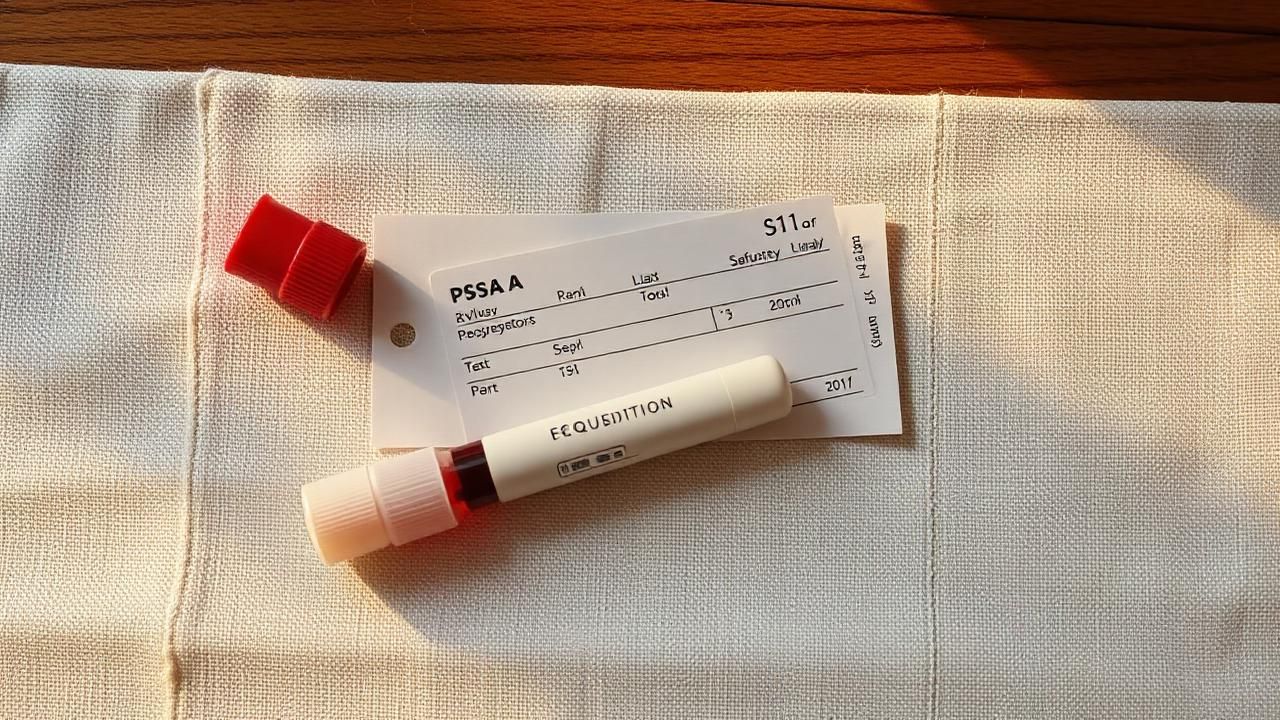
PSA testing. PSA is measured from a single blood sample. Result is typically available within 1-3 working days.
PSA interpretation is more nuanced than a single threshold:
- PSA <4 ng/mL - generally considered normal for most ages, but not exclusively. Even at lower levels, rising PSA over time can be clinically significant.
- PSA 4-10 ng/mL - borderline. Often requires further evaluation (repeat testing, MRI, sometimes biopsy).
- PSA >10 ng/mL - significant elevation, typically warrants further evaluation including specialist referral.
PSA is influenced by:
- Prostate size - larger prostates (including BPH & Enlarged Prostate Treatment in Malaysia) produce more PSA at baseline. Age-adjusted PSA accounts for this.
- Recent activity - recent ejaculation (within 48 hours), prostatic massage, recent urinary catheterisation, recent cycling, recent prostate biopsy - all can elevate PSA.
- Prostatitis Treatment in Malaysia - significantly elevates PSA; repeat after treatment and resolution.
- 5-alpha reductase inhibitors (finasteride, dutasteride taken for BPH) - halve PSA levels; values must be doubled for interpretation.
PSA velocity and density. How PSA changes over time often matters more than a single value. PSA velocity (rate of change) and PSA density (PSA relative to prostate size) provide additional context. This is why baseline PSA in your 40s is valuable - it gives a personal reference point.
Digital rectal exam (DRE). A brief, focused examination performed during the consultation. Done in lateral position (lying on the side); takes 1-2 minutes. Allows direct assessment of prostate size, symmetry, texture, and any palpable nodules. Generally uncomfortable rather than painful.
DRE detects approximately 18% of prostate cancers missed by PSA alone - combination of PSA + DRE is more sensitive than either alone.
Multiparametric MRI (mpMRI). Increasingly central to evaluation. mpMRI of the prostate is non-invasive and can identify suspicious areas that warrant biopsy - and importantly, can identify when biopsy is not needed despite elevated PSA, sparing unnecessary procedures.3
Hisential coordinates mpMRI imaging through diagnostic partner centres when PSA findings warrant. The imaging is performed at the partner centre, results are reviewed at Hisential, and onward referral is coordinated if needed.
Comprehensive workup includes screening for related conditions:
- BPH & Enlarged Prostate Treatment in Malaysia - non-cancerous prostate enlargement with overlapping symptoms.
- Prostatitis Treatment in Malaysia - prostate inflammation that can elevate PSA.
- Comprehensive Health Screening in Malaysia - broader cardiovascular and metabolic evaluation typically appropriate for those over 50.
When referral is needed. If screening findings suggest possible cancer (significantly elevated PSA, rising PSA over time, abnormal DRE, suspicious MRI findings), referral to an MMC-registered urology centre is initiated for biopsy and further evaluation. Your personal health concierge coordinates the referral pathway - appointment scheduling, sharing of screening results, and continuity of care.
Before your visit. Your personal health concierge shares a brief intake form covering personal and family history of cancers, urinary symptoms, sexual function, and any prior prostate screening or related investigations. Bring any prior results - even from years ago, baseline PSA values are useful context.
During your visit. The consultation lasts 45-60 minutes. our medical team takes a focused history covering urinary symptoms, sexual function changes, family history details, and screening goals. Discussion of what screening can and cannot tell you, and what the next steps would look like for different result patterns.
Digital rectal exam is performed in a private setting. Brief, focused, generally uncomfortable rather than painful.
Blood is drawn for PSA. Urinalysis if relevant. If you've come with elevated PSA from elsewhere or recent screening results, discussion focuses on interpretation and next steps rather than starting from scratch.
After your visit. PSA result returns in 1-3 working days. Your personal health concierge contacts you to share results discreetly.
- If normal: routine ongoing monitoring scheduled - typically 1-2 year intervals.
- If borderline: repeat PSA in 4-6 weeks (often resolves transient elevations from prostatitis, recent ejaculation, recent vigorous cycling). Consideration of mpMRI if persistent.
- If elevated: same-day follow-up consultation. Multiparametric MRI coordinated. Specialist urology referral initiated if MRI findings warrant.
Confidentiality. Records are encrypted. Hisential does not share information with employers, family, or insurers without your explicit consent. Referrals to urology centres involve sharing relevant clinical records with your explicit consent.
Screening pathway in depth
Baseline screening establishes a starting point - both for current risk assessment and as a personal reference for future comparison.
What's included: detailed history covering urinary symptoms, sexual function, family history (particularly cancer history), and any prior PSA results; digital rectal exam (DRE); PSA blood test; urinalysis (to rule out infection or other obvious causes of PSA elevation); risk-factor assessment including ethnicity, age, and family history of related cancers (breast, ovarian, BRCA).
The consultation: 45-60 minutes. Conversation about screening - what it does and doesn't tell us, what next steps would look like based on different result patterns, individual preferences about how to proceed. This isn't just data collection; it's informed decision-making about whether and how to screen.
Timeline: consultation, exam, and blood draw at a single visit. PSA result returns in 1-3 working days. Result discussion with your personal health concierge - by phone, WhatsApp, or follow-up consultation depending on findings.
If baseline is normal: repeat screening at 1-2 year intervals depending on age and risk factors. Your personal health concierge schedules reminders.
If baseline is elevated or borderline: further evaluation pathway - repeat PSA in 4-6 weeks (often eliminates transient elevations), consideration of multiparametric MRI, and structured referral if indicated.
Best suited for first-time prostate screening at age 50+, earlier baseline (40+) with family history, patients resuming screening after a gap, or patients with new urinary symptoms requiring evaluation.
Once a baseline is established, ongoing monitoring is calibrated to individual risk and prior results.
Standard ongoing schedule: average risk with normal baseline - PSA + DRE every 1-2 years; elevated PSA but no biopsy indication - PSA every 4-12 months depending on values; family history - more frequent, typically every 6-12 months; prior biopsy showing no cancer - every 6-12 months for surveillance.
What we look for: PSA velocity (rate of change over time - a rising PSA, even within "normal" range, can be clinically significant); PSA density (PSA divided by prostate volume measured on imaging - higher density suggests higher cancer probability); free PSA ratio (lower free PSA suggests higher cancer probability); changes on DRE (new nodules, change in texture, asymmetry developing over time).
The advantage of consistent monitoring: single PSA values can be misleading - they're influenced by transient factors. Trends over time, in the context of personal baseline, are far more informative. Consistent monitoring through the same clinical team with consistent measurement protocols provides the most reliable signal.
When monitoring triggers escalation: rising PSA velocity (typically >0.75 ng/mL per year, or doubling time <3 years); absolute PSA above age-adjusted threshold; new DRE abnormality; new significant urinary symptoms suggesting cancer rather than BPH.
When monitoring triggers escalation, the next step is typically multiparametric MRI rather than direct biopsy referral.
Multiparametric MRI (mpMRI) has transformed prostate cancer evaluation over the past decade. Instead of taking biopsy samples blindly from PSA-elevated patients, MRI allows targeted assessment - identifying suspicious areas and ruling out cancer in many cases without biopsy.
What mpMRI involves: non-invasive scan with no radiation (MRI uses magnetic fields); typically 30-45 minutes in the scanner; performed at a diagnostic imaging centre (coordinated by Hisential); mild contrast injection in some protocols; some patients find the enclosed space uncomfortable - sedation is available where needed.
What it shows: mpMRI identifies areas within the prostate that have characteristics suspicious for cancer. Results are graded using the PI-RADS classification - PI-RADS 1-2 (very low to low probability of clinically significant cancer); PI-RADS 3 (intermediate/equivocal - often warrants further assessment); PI-RADS 4-5 (high probability of clinically significant cancer - biopsy strongly indicated).
The value of mpMRI in screening: avoid biopsy in many cases (PI-RADS 1-2 results often justify continued monitoring rather than biopsy); target biopsy when needed (MRI findings guide biopsy to specific suspicious areas, increasing detection of clinically significant cancers); reduce diagnosis of clinically insignificant cancers by focusing on areas more likely to harbour aggressive disease.
Hisential's coordination: where mpMRI is appropriate, we discuss the rationale at consultation, coordinate booking at a diagnostic imaging partner centre, receive and review results with you, coordinate onward referral to specialist urology if MRI findings warrant biopsy, and maintain continuity of care throughout.
Insurance and cost: mpMRI cost varies by centre and any contrast used. Some insurance policies cover it under outpatient imaging benefits; others classify it as elective for screening purposes. Your personal health concierge can help with itemised invoicing or arrange direct billing depending on preference.
When screening findings suggest the need for biopsy or further evaluation beyond what Hisential provides, structured referral to specialist urology is initiated. Continuity of care is maintained through your personal health concierge.
When referral is initiated: PI-RADS 4-5 MRI findings; significantly elevated PSA without clear non-cancer explanation; rising PSA velocity beyond age-adjusted thresholds; abnormal DRE findings (palpable nodule, asymmetry, hardness); patient preference for further evaluation.
What happens during referral: Hisential prepares a structured referral summary - screening history, all PSA values, DRE findings, MRI report (if done), risk assessment. Referral to an MMC-registered urology centre - typically at one of several partner centres in Kuala Lumpur. Appointment booking facilitated by your personal health concierge. Records shared securely (with your explicit consent) - your time isn't wasted re-explaining your screening history.
What the urology evaluation typically involves: review of screening findings; repeat DRE if indicated; discussion of biopsy; possible transperineal or transrectal prostate biopsy under image guidance; histopathology of biopsy samples to confirm or exclude cancer; if cancer is found, grading of aggressiveness (Gleason score, ISUP grade).
If biopsy is negative: you can return to Hisential for ongoing monitoring with continued screening at appropriate intervals. The urology referral becomes part of your screening history for future risk assessment.
If biopsy is positive: the urology centre coordinates next steps including additional staging, treatment options discussion (active surveillance, surgery, radiation, hormonal therapy, focal therapies depending on cancer characteristics), and ongoing oncology care. You can choose to maintain Hisential as your general practice for continuity, even as prostate cancer care moves to specialist centres.
Hisential does not perform: prostate biopsy, prostate cancer surgery (prostatectomy), radiation therapy, or hormonal therapy for prostate cancer. These are procedures performed at urology and oncology centres. Hisential's role is structured screening, referral coordination, and continuity of general care.
How Hisential approaches prostate cancer screening
At Hisential, we treat prostate cancer screening as an individual decision shaped by personal risk, age, family history, and informed preference - not as a universal annual ritual. Every patient receives structured baseline assessment including detailed family and personal history, PSA blood testing, digital rectal exam, and individualised risk stratification. Ongoing monitoring is calibrated to baseline findings and risk factors - typically every 1-2 years for average risk, more frequent for those with family history or borderline values. Where PSA is elevated or rising, multiparametric MRI imaging is coordinated through diagnostic partner centres before any biopsy consideration - modern screening uses MRI to focus biopsy when needed and to avoid biopsy when results clearly support continued surveillance.3 Biopsy and prostate cancer treatment are performed by specialist urology centres; Hisential coordinates referral and maintains continuity of care. Your personal health concierge schedules ongoing monitoring, manages results delivery, and coordinates across specialties when referral is needed.
Quick answers
Q:
At what age should I start prostate screening?
Generally 50+ for average risk, 45+ with family history, 40+ with strong family history or BRCA-related cancers. The decision is individual.
Q:
Is PSA testing accurate?
PSA is sensitive but not specific - elevated values can result from BPH, prostatitis, or recent activities. Combined with DRE, family history, and MRI when needed, screening is reliable.
Q:
How often should I be screened?
Average risk: every 1-2 years. Family history or prior borderline PSA: every 6-12 months. The schedule is calibrated to individual risk.
Q:
Does prostate cancer screening cause harm?
Modern screening aims to minimise over-diagnosis through MRI-first protocols3 and active surveillance for low-risk findings, reducing unnecessary biopsies and treatments.
Q:
Does Hisential perform prostate biopsy?
No - biopsy is performed at specialist urology centres. Hisential coordinates structured referral and maintains continuity of care.
Q:
What's the prognosis for prostate cancer?
Highly favourable when detected early. 5-year survival for localised disease exceeds 95%; long-term outcomes for early-stage cancer are excellent.2
Frequently asked questions
Clear answers, written by our clinical team. Tap any question for its direct permalink, or reach out to your Personal Concierge for anything else.
Not necessarily. Many causes of elevated PSA exist beyond cancer - BPH, prostatitis, recent activities, urinary catheterisation, recent biopsy. The next step is usually repeat PSA, consideration of multiparametric MRI, and structured evaluation - not immediate assumption of cancer.
Prostate biopsy is a urology procedure typically performed under image guidance, often with sedation, requiring specific facilities and post-procedure monitoring. We coordinate referral to specialist urology centres for biopsy while maintaining continuity of your overall care.
No. Some low-risk prostate cancers are appropriately managed with active surveillance - regular monitoring without immediate treatment. Treatment is initiated when there's evidence of progression. This avoids the side effects of treatment for cancers that wouldn't progress.
Not necessarily. Screening is appropriate when its potential benefit outweighs the harms of over-diagnosis. For older patients or those with shorter life expectancy, the benefit of screening decreases, and the conversation shifts toward symptom-driven evaluation rather than routine screening.
Yes - many. Recent ejaculation (within 48 hours), recent vigorous cycling, recent urinary catheterisation, recent prostate examination or biopsy, prostatitis, urinary tract infection. We typically advise avoiding ejaculation and cycling 48 hours before PSA testing.
Still have a question?
Your Personal Concierge replies within one business day - confidentially.
Glossary
- PSA (Prostate-Specific Antigen)
- Protein produced by the prostate, measured in blood. Used in prostate cancer screening but not specific to cancer.
- DRE (Digital Rectal Exam)
- Physical examination of the prostate through the rectal wall. Complements PSA in screening; detects some cancers missed by PSA alone.
- PSA velocity
- Rate of change of PSA over time. Rising PSA can be clinically significant even within "normal" range.
- PSA density
- PSA value divided by prostate volume. Higher density suggests higher cancer probability.
- Free PSA ratio
- Proportion of PSA that is unbound. Lower free PSA ratio suggests higher cancer probability.
- mpMRI (multiparametric MRI)
- Non-invasive prostate imaging study that identifies suspicious areas. Central to modern prostate evaluation.
- PI-RADS
- Standardised classification of mpMRI findings, from 1 (very low cancer probability) to 5 (very high cancer probability).
- Active surveillance
- Strategy of monitoring low-risk prostate cancer without immediate treatment. Treatment initiated only if evidence of progression emerges.
Sources
- 1. Ministry of Health Malaysia. Malaysian National Cancer Registry - prostate cancer incidence.
- 2. American Cancer Society. Survival Rates for Prostate Cancer (current).
- 3. Drost FH et al. Prostate MRI, with or without MRI-targeted biopsy, and systematic biopsy for detecting prostate cancer (Cochrane Database, 2019).
- 4. US Preventive Services Task Force. Screening for Prostate Cancer: Recommendation Statement (2018, reviewed 2023).
Ready to start?
Informed prostate screening, calibrated to you.
Speak with our Medical team and your personal health concierge - same-day appointments at Hisential Clinics.
Visit Hisential Clinics
Hisential Clinic Bangsar
Lot S122, 2nd Floor, Bangsar Shopping Centre,
285 Jalan Maarof, 59000 Kuala Lumpur, Malaysia
Phone: +60 3-8603 7220
WhatsApp: +60 12-841 3969
Hours: 10am-8pm daily
Parking: Bangsar Shopping Centre underground car park, validated for clinic visitors. Public transit: Damansara Heights LRT (10-min walk) or Bangsar LRT (taxi from station).
Related conditions and services
BPH treatment
Non-cancerous prostate enlargement. Frequently co-evaluated with prostate screening.
Prostatitis treatment
Prostate inflammation that elevates PSA and requires distinct evaluation.
Low testosterone treatment
Hormonal evaluation, complementary to prostate health assessment.
Comprehensive health screening
Cardiovascular and metabolic evaluation typically included for men over 50.
Medically reviewed by Dr. Jasvinderpal Singh, MD, FIFA Dip. Football Medicine, Cert. Men's Health (SMHS)
Last reviewed 1 May 2026 · Next review 1 November 2026