
HIV Testing · Kuala Lumpur, Malaysia
Know your status. Move forward with clarity.
Confidential 4th-generation HIV testing at Hisential Clinics. MMC-registered doctors, rapid screening with laboratory confirmation, calm and discreet pre and post-test consultation. Same-day appointments.
Testing is routine, the results are usually negative, and either way - knowing is the foundation of everything that follows.
- MMC-registered doctors
- KKM Licensed Clinic
- 4.9 · 750+ reviews
- Bangsar Shopping Centre
- 10am-8pm daily
- Personal health concierge

Quick Answer
HIV testing is the diagnostic step that converts uncertainty into clarity. At Hisential Clinics, our MMC-registered medical team offer 4th-generation HIV testing - the current diagnostic standard, detecting both antibody and antigen with a window period of approximately 18-45 days.1 Rapid screening available during consultation. Confidential, judgment-free, with structured pre and post-test counselling.
Verified by our medical team · Last reviewed 14 May 2026 · Next review 10 Nov 2026
Related conditions: HIV PrEP in Malaysia, HIV PEP in Malaysia, STD Testing in Malaysia, and HPV & Genital Wart Removal in Malaysia.
Book in 60 seconds
Online booking or WhatsApp. Choose your preferred slot.
Discreet, structured consultation
Pre-test conversation, rapid finger-prick screening, and venous draw for laboratory confirmation.
Results & clear next steps
Coordinated by your personal health concierge. Negative results delivered promptly; any non-negative result triggers immediate confirmation and same-day follow-up.
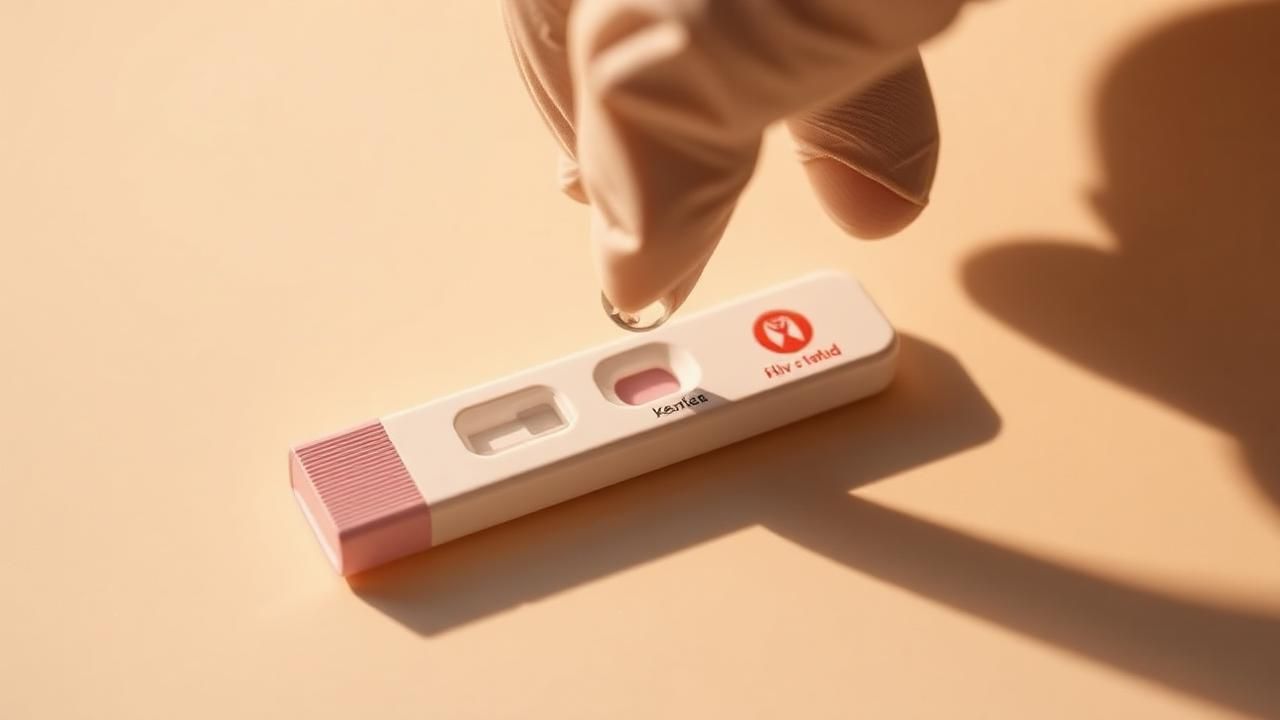
What are the different types of HIV tests, and which one do I need?
Hisential offers the full ladder of HIV testing - 3rd-generation and 4th-generation rapid kits, accredited 4th-generation laboratory testing, HIV RNA (NAT/PCR) for the earliest detection, and Anonymous HIV Testing (AHT) for fully alias-only screening. Your doctor selects the right test based on when your exposure was, your symptoms (if any), and your privacy preference.
Anonymous HIV Testing (AHT)
No IC, no name, no contact number. Register under an alias or code. Same 4th-generation clinical test - just zero paper trail under your identity.
Rapid HIV testing - 3rd and 4th-generation kits
Finger-prick blood test with results in 20-30 minutes during the consultation. Hisential stocks both 3rd-generation (antibody) and 4th-generation (antibody + p24 antigen) rapid kits - your doctor selects the right kit based on your window period.
Best suited for
Same-day clarity, post-exposure follow-up, baseline before HIV PrEP, or routine PrEP monitoring
4th-generation laboratory test
Venous blood draw analysed at an accredited laboratory. Current diagnostic standard - detects both HIV antibodies and the p24 antigen with the highest analytical sensitivity. Confirms any reactive rapid result.
Best suited for
Definitive screening result, confirmation of reactive rapid tests, baseline workup
HIV RNA / NAT (PCR) test
Laboratory PCR test that detects HIV viral RNA directly - the earliest test available, from approximately 7-10 days post-exposure. Useful for very recent high-risk exposure, suspected acute HIV, or indeterminate rapid / lab results.
Best suited for
Very recent (<3 weeks) high-risk exposure, acute HIV symptoms, indeterminate antibody/antigen results
Anonymous HIV Testing (AHT)
Same clinical test as named HIV testing - 4th-generation rapid + venous confirmation - but registered under an alias or code. No IC, no name, no contact number, no SMS or email. Results delivered in person only against your code.
Best suited for
First-time testers, anyone wanting full privacy with no record under their identity, confidential baseline screening
Window period strategy
Structured testing schedule when timing relative to exposure matters - baseline now, repeat at 4 weeks and 12 weeks for complete certainty.
Best suited for
Recent specific exposure where the window period for current tests hasn't fully passed
Pre and post-test counselling
Structured clinical conversation - what the test detects, what results mean, what follows in either direction.
Best suited for
Every patient - the conversation is part of the test, not separate from it
When can each HIV test detect infection?
Different HIV tests become reliable at different points after exposure. HIV RNA (NAT/PCR) detects infection earliest from ~7-10 days; 4th-generation antigen/antibody tests become reliable from ~18-28 days; 3rd-generation antibody tests reach full sensitivity by ~45 days.
- NAT Detectable HIV RNA
- 4th Gen. HIV p24 Ag + Ab EIA
- 3rd Gen. HIV-1/2 Ab EIA
Self-check
Is HIV testing right for you?
A confidential, 30-second self-check. Tick any that apply in the past 12 months. Testing is recommended for anyone ticking one or more. Your responses stay on this device only.
This self-check is informational only. Testing decisions are made individually with your clinician.
Why people choose Hisential
Personal health concierge
One dedicated contact who coordinates your testing, results delivery and any follow-ups end-to-end.
MMC-registered doctors
Focused experience in sexual health, HIV testing and counselling.
Confidential by design
Discreet booking, private consultation rooms, encrypted records. Results not shared without explicit consent.
Same-day availability
Most consultations available within 5 working days, often sooner.
HIV testing is a structured diagnostic process designed to detect HIV infection with the highest accuracy possible. Modern testing is dramatically better than the testing of two decades ago - faster, more sensitive, and more confidential.
The clinical reality of HIV today. HIV is no longer a death sentence. Modern antiretroviral therapy (ART) is one or two pills daily for most patients, with minimal side effects, and produces undetectable viral load in nearly all patients within 3-6 months. Undetectable viral load eliminates sexual transmission (the U=U principle: Undetectable = Untransmittable).2 Life expectancy on effective treatment is approaching that of HIV-negative individuals.
This matters for testing. The reason to know your status is no longer "to prepare for the worst" - it's to access effective treatment if positive (so you stay healthy and don't transmit), or to confirm you're negative (so you can make informed decisions about prevention going forward, including HIV PrEP in Malaysia).
Who should test. Routine HIV testing is recommended for all sexually active adults at least once. More frequent testing is appropriate for: anyone with new partners, anyone with multiple partners, anyone with a partner who has HIV or an undisclosed status, anyone diagnosed with another STI, anyone considering HIV PrEP in Malaysia, and anyone with a specific recent exposure concern.
Why most results are negative. The vast majority of HIV tests are negative. Population prevalence in Malaysia is approximately 0.4% in adults.3 Even in higher-risk groups, the majority of individual tests are still negative. Anxiety about testing is understandable but disproportionate to the actual probability for most testers.
What if a result is positive. Modern HIV treatment is initiated as soon as possible after diagnosis. Most patients are on stable treatment within weeks, achieve undetectable viral load within months, and live full healthy lives indefinitely. The clinical pathway is well-established, and Hisential coordinates referral to HIV experts while maintaining continuity of care.
The hardest part of HIV testing has always been the decision to test. The test itself is fast, simple, and confidential.
4th-generation HIV testing - the current diagnostic standard. The 4th-generation test detects two things simultaneously: HIV antibodies (produced by the immune system in response to infection, typically detectable 3-12 weeks after exposure) and the p24 antigen (a viral protein produced before antibodies become detectable, often detectable from approximately 18 days after exposure).
Combining both markers, the 4th-generation test has a window period of approximately 18-45 days for most exposures.1 A negative test outside this window is highly reliable. A positive result is repeated using a confirmatory testing pathway.
Sample types. Finger-prick rapid test - small drop of blood from a finger, result available in 20-30 minutes during the consultation. Used for screening. Any positive rapid test is confirmed with venous blood testing. Venous blood test - standard laboratory test from a small blood sample. Result available within 1-3 working days. Higher sensitivity and used for confirmation, baseline, and routine screening.
Window period and timing. The "window period" is the time after exposure during which a test cannot reliably detect infection. Testing timing is calibrated to this:
- Immediately after exposure: baseline testing is valuable for establishing pre-exposure status, but most won't yet detect very recent infection. If exposure was within 72 hours, HIV PEP in Malaysia should be considered immediately alongside baseline testing.
- 2 weeks after exposure: rapid tests may detect HIV in some early cases but not reliably
- 4 weeks after exposure: 4th-generation testing detects approximately 80% of new infections
- 6 weeks after exposure: detection rate approximately 95%
- 12 weeks after exposure: detection rate approaching 100% - this is the conventional "definitive negative" threshold
For complete certainty after a specific exposure, testing at 4 weeks and again at 12 weeks is the standard protocol.
Co-testing recommendations. HIV testing alone is rarely the right approach. Hisential typically offers HIV testing alongside STD Testing in Malaysia - including syphilis, chlamydia, gonorrhoea, and hepatitis B and C - because the same risk factors apply to all of them and testing them together provides complete clarity.
For ongoing prevention. If you test negative and your situation suggests ongoing HIV risk, HIV PrEP in Malaysia is the established preventive option. PrEP is approximately 99% effective at preventing HIV transmission when taken as prescribed.4 If your situation suggests potential past exposure, STD Treatment in Malaysia for any concurrent infections is initiated immediately. To start any of these pathways, connect with your Personal Health Concierge.
Before your visit. Your personal health concierge shares a brief intake form covering general history. No detailed sexual history is required before the consultation. Bring identification for laboratory testing.
During your visit. The consultation lasts 30-45 minutes - longer than some testing visits because the conversation is part of the care. our medical team takes a focused history covering testing rationale (routine vs specific concern), prior testing history, current symptoms if any, vaccination status, and any anxiety or concerns you'd like addressed.
The tone is matter-of-fact and judgment-free. Direct questions are asked to enable appropriate testing - not for moral evaluation.
Pre-test counselling integrates with history-taking. The test itself follows: rapid finger-prick test if requested, plus venous blood draw for laboratory confirmation. Other STI tests are typically run on the same blood sample if you choose to add them.
After your visit. Rapid test result is available within 20-30 minutes during the same visit if requested. Laboratory results return in 1-3 working days. Your personal health concierge shares results discreetly by your preferred channel.
If any result is positive, immediate next steps are activated - confirmatory testing, expert referral coordination, and same-day follow-up consultation. You do not navigate this alone. If negative, ongoing prevention strategy is discussed if appropriate, and routine retesting is scheduled if your situation suggests it.
Confidentiality. Records are encrypted. Hisential does not share information with employers, family members, or insurers without your explicit consent. HIV testing results are particularly protected - not added to any external record without your specific approval.
Testing scenarios in depth
Routine HIV screening is the simplest and most common testing scenario - testing without any specific recent exposure concern, as part of general health maintenance.
Recommended timing: at least once for every sexually active adult; annually for adults with any sexual activity outside long-term mutually-monogamous relationships; every 3-6 months for adults with multiple partners or higher-frequency activity; before starting any new relationship for baseline clarity; before starting HIV PrEP (mandatory baseline test); during pregnancy (universal antenatal testing).
What's involved: a single consultation, blood draw, and result follow-up. Rapid screening can be added if you want immediate result reassurance; venous testing is the standard confirmatory pathway.
What we discuss at consultation: a brief history covering general sexual health, any specific concerns, prior testing, vaccination status (particularly hepatitis B), and any current symptoms. This is matter-of-fact - direct questions are asked because direct questions lead to appropriate testing, not because anyone is making moral assessments.
Results delivery: discreet - by your preferred channel (phone, WhatsApp, or in-person). Negative results are shared promptly. Any non-negative result triggers immediate confirmatory testing and same-day follow-up consultation.
Best for: most testers. Annual screening is part of routine adult health care, not an exceptional event.
Rapid HIV testing provides initial results within 20-30 minutes during the consultation itself - useful when waiting for laboratory turnaround isn't acceptable.
How it works: a small finger-prick blood sample is applied to a test cartridge. The cartridge detects HIV antibodies (and in modern rapid tests, the p24 antigen) within 20-30 minutes. The result is read during the consultation.
Result interpretation: Negative rapid result outside the window period is highly reliable. Negative within the window period is reliable for the time tested, but repeat testing at 4 weeks and 12 weeks is recommended for complete certainty. Positive rapid results trigger immediate confirmatory testing on venous blood during the same visit. Most positive rapid results are confirmed, but some are false positives (which is why confirmatory testing is always done).
Pre-test counselling: before the rapid test, we discuss what a positive result would mean and what the immediate next steps would be. This is to ensure you're prepared for whatever result comes - not to delay or discourage testing.
Post-test counselling: after a negative result, we discuss ongoing prevention strategy if appropriate. After a positive result, we activate the immediate care pathway - same-day confirmation testing, expert HIV referral coordination, and immediate emotional and informational support.
Best for: patients who specifically want immediate result, those preparing for a same-day decision (such as starting HIV PrEP), or those who would experience harmful waiting anxiety.
When a specific potential exposure has occurred - unprotected contact with a partner of unknown or positive status - testing follows a structured pathway calibrated to the window period.
The 72-hour window for HIV PEP: if exposure was within 72 hours and is genuinely high-risk (unprotected receptive anal intercourse with a partner of unknown status, sharing of injection equipment, occupational needle-stick), HIV PEP - a 28-day course of antiretroviral medication - can substantially reduce transmission risk. PEP is started immediately during the same consultation; baseline testing happens alongside.
The full testing schedule after exposure: immediate 4th-generation baseline confirms pre-exposure status; repeat 4th-generation at 4 weeks detects approximately 80% of new infections; final 4th-generation at 12 weeks detects approximately 100% of new infections (definitive negative); a 6-month optional repeat is rare and only used when specific risk factors warrant.
A negative test at 4 weeks is reassuring but not definitive. A negative test at 12 weeks is conventionally considered definitive for the 4th-generation test.
What if PEP was taken: if PEP was completed for this exposure, the testing schedule is extended slightly - confirmatory testing at 12 weeks after PEP completion (i.e. approximately 16 weeks after exposure) because PEP can delay seroconversion.
Pre and post-test consultation: each test point is paired with consultation - what the result means, what next, and how to manage anxiety in the intervening weeks. Most testers' anxiety is significantly disproportionate to the actual probability of positive result, and the consultation includes evidence-based risk stratification.
Best for: anyone with a specific recent exposure concern requiring structured testing over weeks to months.
Pre and post-test counselling is integrated into every HIV test consultation at Hisential. It's not separate or optional - the conversation is part of the test, because results without context produce more anxiety than clarity.
Pre-test conversation covers: what the test is (4th-generation HIV test, what it detects, window period); why test now (your specific reasons, your risk factors if any, the broader rationale); what a positive result would mean (current treatment options, prognosis, immediate care pathway, U=U principle, no transmission on effective treatment); what a negative result would mean (including whether further testing is needed within the window period or whether HIV PrEP is appropriate going forward); confidentiality (how results are handled, who has access); your anxiety baseline (calibrating consultation tone to where you are emotionally).
This conversation typically takes 10-15 minutes. It's matter-of-fact, not heavy.
Post-test conversation (negative result): reassurance and context - what negative means, when to retest if within window; prevention going forward, including HIV PrEP if appropriate; continued testing schedule for ongoing risk situations; any other concerns or questions.
Post-test conversation (positive result): confirmation pathway with same-day confirmatory venous testing; immediate next steps including referral to HIV expert (typically within 1-2 weeks) and baseline workup (CD4 count, viral load, drug resistance, opportunistic infection screening); treatment initiation - modern ART is typically started within weeks of diagnosis, with effective treatment producing undetectable viral load within 3-6 months; the U=U principle - effective treatment eliminates sexual transmission; prognosis - life expectancy on effective treatment approaches that of HIV-negative individuals; partner notification with confidential support, your timing and approach; continuity of care - your personal health concierge stays involved through and after expert referral; emotional support and follow-up scheduling.
Best for: every tester. The consultation conversation is what turns a result into a clear path forward.
How Hisential approaches HIV testing
At Hisential, we treat HIV testing as routine clinical care delivered with calm, matter-of-fact precision - never as an exceptional event requiring justification. Every patient receives 4th-generation testing (detecting both antibody and antigen, window period 18-45 days), with rapid screening available during the consultation for those wanting immediate result. Pre and post-test counselling is integrated into every visit - not because tests are dangerous, but because results without context produce anxiety rather than clarity. Where window-period timing matters, structured retesting at 4 weeks and 12 weeks follows. Negative results trigger discussion of HIV PrEP in Malaysia if appropriate; positive results activate immediate confirmatory testing and expert referral coordination, with continuity of care maintained through your personal health concierge. Confidentiality is absolute.
Quick answers
Q:
How long after exposure can HIV be detected?
The 4th-generation test detects HIV approximately 18-45 days after exposure. For complete certainty, repeat at 4 weeks and 12 weeks is the standard protocol.
Q:
What does "undetectable" mean?
Undetectable means HIV viral load is below the threshold of measurement. Undetectable = Untransmittable: people on effective treatment do not sexually transmit HIV.
Q:
Are results truly confidential?
Yes - entirely. Records are encrypted, results are shared only with you, and nothing is reported to employers, family, or insurers without your explicit consent.
Q:
Can HIV be cured?
HIV cannot currently be cured, but it can be controlled. Modern treatment produces undetectable viral load in nearly all patients, with life expectancy approaching that of HIV-negative individuals.
Q:
What happens if I test positive?
Immediate confirmation, same-day expert referral, and treatment initiation. You do not navigate this alone - your personal health concierge stays involved throughout.
Q:
Should my partner also test?
Generally yes. If you test positive, partner testing is recommended. If you test negative but have specific exposure concerns, partner testing is the right adjunct.
Frequently asked questions
Clear answers, written by our clinical team. Tap any question for its direct permalink, or reach out to your Personal Concierge for anything else.
3rd-generation rapid tests detect HIV antibodies only and become reliable around 21-45 days after exposure. 4th-generation rapid tests detect both HIV antibodies and the p24 antigen, so they become reliable earlier (~18-28 days). At Hisential we stock both 3rd-gen and 4th-gen rapid kits and the doctor selects the right kit based on your window period.
Very accurate - approaching 100% sensitivity and specificity for samples taken outside the window period. False positives occur occasionally, which is why confirmatory testing is always done. False negatives within the window period are why retesting at 12 weeks is standard for definitive negative.
The window period is the time after exposure during which a test cannot reliably detect HIV. For the 4th-generation test, the window period is approximately 18-45 days. For 3rd-generation antibody tests it is approximately 21-90 days. Definitive negative is at 12 weeks after the most recent exposure.
An HIV RNA test (also called NAT - Nucleic Acid Test) can detect HIV from approximately 7-10 days after exposure - the earliest of any HIV test. It is typically used for very recent high-risk exposure, suspected acute HIV symptoms, or indeterminate rapid/lab results. Turnaround is 1-3 working days as it is a laboratory PCR test.
Yes. Hisential offers [Anonymous HIV Testing (AHT)](/hiv-testing-anonymous) - you register under an alias or code, with no IC, no name and no contact number recorded. The clinical test is identical (4th-generation rapid + venous confirmation if reactive); only the administrative record is anonymised. Results are released only in person against your code.
FDA / HSA-approved HIV self-tests (typically oral-fluid antibody tests) are reasonably accurate outside the window period but generally have lower sensitivity than clinic-based 4th-generation tests and a longer window period - often around 3 months for a definitive negative. A negative self-test inside the window period does not rule out infection, and any reactive (positive) self-test must be confirmed at a clinic. Self-tests are also more prone to user error in sample collection and result reading.
Common risks include: counterfeit or expired kits, brands that are not approved by KKM (Ministry of Health Malaysia), incorrect storage during shipping (heat and humidity in Malaysia degrade test sensitivity), no pre or post-test counselling, no immediate confirmatory pathway if reactive, no linkage to HIV PEP, HIV PrEP or treatment, and the emotional burden of receiving a reactive result alone without clinical support. For confidential testing without a paper trail, [Anonymous HIV Testing (AHT)](/hiv-testing-anonymous) at a licensed clinic gives the same privacy with proper clinical safeguards.
Home testing kits are available but have limitations - lower sensitivity than clinic 4th-generation tests, longer window period, privacy of result delivery, no integrated counselling, and no immediate confirmatory pathway if reactive. For full privacy without these limitations, [Anonymous HIV Testing](/hiv-testing-anonymous) at the clinic is usually a better option. Both approaches are valid - we will not lecture you for choosing self-testing.
Anxiety is normal and proportionate. Pre-test counselling addresses anxiety directly - what the test detects, what results mean, statistical probability for your specific situation. Most testers find the consultation reduces anxiety before the result is even available.
Still have a question?
Your Personal Concierge replies within one business day - confidentially.
Glossary
- HIV (Human Immunodeficiency Virus)
- Virus that attacks the immune system. Untreated HIV progresses to AIDS over years; treated HIV is a manageable long-term condition.
- 4th-generation HIV test
- Current diagnostic standard. Detects both HIV antibodies and p24 antigen, providing earlier detection than older antibody-only tests.
- Window period
- Time after exposure during which a test cannot reliably detect infection. Approximately 18-45 days for the 4th-generation HIV test.
- p24 antigen
- Viral protein produced by HIV before antibodies become detectable. Inclusion in 4th-generation tests shortens the window period.
- Seroconversion
- The development of detectable antibodies after HIV infection. Typically occurs 3-12 weeks after exposure.
- CD4 count
- Measure of immune system function in HIV. Used alongside viral load to monitor treatment response.
- U=U (Undetectable = Untransmittable)
- Established clinical principle that HIV-positive individuals on effective treatment with undetectable viral load do not sexually transmit HIV.
Sources
- 1. Cornett JK & Kirn TJ. Laboratory diagnosis of HIV in adults: a review of current methods (Clinical Infectious Diseases, 2013).
- 2. Cohen MS et al. Antiretroviral Therapy for the Prevention of HIV-1 Transmission (NEJM, 2016) - foundational evidence for U=U.
- 3. Malaysian Ministry of Health. Country Progress Report on HIV/AIDS (latest available).
- 4. Grant RM et al. Preexposure chemoprophylaxis for HIV prevention in men who have sex with men (NEJM, 2010) - iPrEx trial, foundational PrEP efficacy.

Ready to test?
Know your status. Move forward with clarity.
Speak with our Medical team and your personal health concierge - same-day confidential HIV testing at Hisential Clinics.
Visit Hisential Clinics
Hisential Clinic Bangsar
Lot S122, 2nd Floor, Bangsar Shopping Centre,
285 Jalan Maarof, 59000 Kuala Lumpur, Malaysia
Phone: +60 3-8603 7220
WhatsApp: +60 12-841 3969
Hours: 10am-8pm daily
Parking: Bangsar Shopping Centre underground car park, validated for clinic visitors. Public transit: Damansara Heights LRT (10-min walk) or Bangsar LRT (taxi from station).
Related conditions and services
Anonymous HIV Testing (AHT)
Same 4th-generation test, registered under an alias - no IC, no name, no contact number.
HIV PEP
Time-sensitive post-exposure HIV prevention within 72 hours.
HIV PrEP
Ongoing pre-exposure HIV prevention for higher-frequency activity.
STD testing
Comprehensive STD panel typically run alongside HIV testing.
STD treatment
Confidential treatment if any concurrent infection is found.
Medically reviewed by Dr. Jasvinderpal Singh, MD, FIFA Dip. Football Medicine, Cert. Men's Health (SMHS)
Last reviewed 1 May 2026 · Next review 1 November 2026