
Hair Loss Treatment · Kuala Lumpur, Malaysia
Doctor-led hair loss care, built on what actually works.
Confidential evaluation at Hisential Clinics. MMC-registered doctors, full medical workup, and four evidence-based treatments matched to your pattern: Minoxidil, Oral Finasteride, Topical Finasteride, and Regenera Activa. Same-day appointments.
Effective hair loss treatment starts with understanding why it's happening - not just what to apply.
- MMC-registered doctors
- KKM Licensed Clinic
- 4.9 · 750+ reviews
- Bangsar Shopping Centre
- 10am-8pm daily
- Personal health concierge

Quick Answer
Hair loss affects approximately 50% of men by age 50 and an increasing proportion of women.1 At Hisential Clinics, our MMC-registered medical team provide doctor-led hair loss care - starting with a full medical workup to identify the cause, then evidence-based treatment matched to pattern, age, and individual response. Same-day confidential consultations available.
Verified by our medical team · Last reviewed 15 May 2026 · Next review 11 Nov 2026
Related conditions: Testosterone Deficiency Treatment in Malaysia, Chronic Fatigue Assessment in Malaysia, and Acne Treatment in Malaysia.
Book a confidential consultation
Same-day appointments at Hisential Clinics. WhatsApp or message us - your Personal Health Concierge confirms within hours.
Consultation, scalp exam & bloodwork
Detailed history, scalp examination, standardised photography, and full bloodwork - all completed at the first visit.
Personalised plan & structured monitoring
Treatment matched to the underlying cause. Photographic review at 3, 6, and 12 months tells us whether the protocol is actually working.
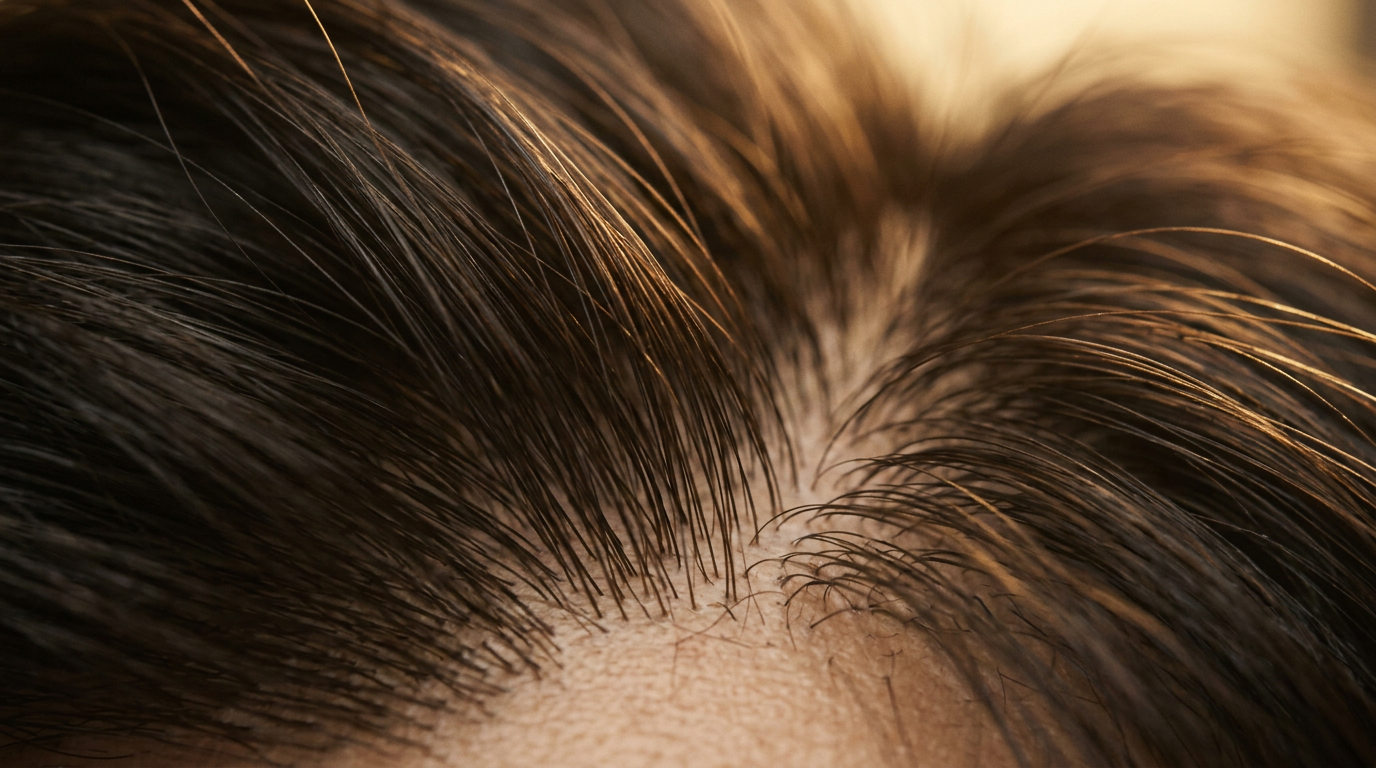
Treatment approaches at a glance
Self-check
What's your hair loss pattern?
A confidential, 30-second self-check. Tick anything that applies - these patterns help guide what's likely going on and what evaluation makes sense. Your responses stay on this device only.
This is not a clinical diagnosis. Pattern is one signal; bloodwork and examination determine the actual cause.
Why people choose Hisential
Doctor-led, not product-led
MMC-registered doctors evaluating the underlying causes - testosterone, thyroid, iron, nutritional - before prescribing. Treatment is personalised, not a single subscription product.
Full medical workup
Bloodwork to identify reversible causes (thyroid, iron deficiency, vitamin D, nutritional). Many hair loss cases improve with cause-specific treatment, not just hair-loss medications.
Structured monitoring
Photographic monitoring and clinical review at 3, 6, and 12 months. Hair loss treatment takes time - structured follow-up tells us whether the protocol is actually working.
Honest assessment of expectations
We discuss what works, what doesn't, and what's worth the time and cost for your specific pattern - no over-promising, no upselling beyond what's clinically warranted.
Hair loss is one of the most common male health concerns - and increasingly female. Approximately 50% of men experience meaningful hair loss by age 50; female pattern hair loss affects approximately 40% of women by age 60.1
Hair growth fundamentals:
Each scalp follicle cycles through phases: anagen (growth, 2-7 years), catagen (transition, 2-3 weeks), telogen (rest, 3 months), exogen (shedding). At any given time, approximately 85% of scalp hair is in anagen, 1-2% in catagen, and 13% in telogen.
Daily hair shedding of 50-100 strands is normal - and means a similar number is entering new growth cycles. The visible changes in hair loss occur when more follicles enter telogen and shed simultaneously, or when follicles miniaturise (producing progressively thinner, shorter hairs).
Main types of hair loss:
Androgenetic alopecia (male pattern hair loss, female pattern hair loss) is the most common cause. Hormonally driven - testosterone is converted to DHT (dihydrotestosterone), which gradually miniaturises follicles in genetically susceptible patterns. Male pattern: receding hairline, crown thinning. Female pattern: diffuse thinning across the top, with the hairline preserved.
Telogen effluvium is acute hair shedding 2-4 months after a triggering event - major illness, surgery, childbirth, severe weight loss, significant stress, certain medications. Hair density returns to baseline over 6-12 months once the trigger is resolved.
Alopecia areata is an auto-immune condition causing sudden round patches of hair loss. Affects approximately 2% of the population at some point. Often self-resolving but treatable.
Nutritional and medical causes include iron deficiency, vitamin D deficiency, thyroid disease, Testosterone Deficiency Treatment in Malaysia, and zinc deficiency. All can contribute to or accelerate hair loss - and importantly, all are reversible when identified and corrected.
Scarring alopecia is less common. Inflammatory conditions that permanently destroy hair follicles, with a distinct evaluation and treatment pathway.
Why medical workup matters before treatment:
Hair loss treatments differ significantly by cause. Treating androgenetic alopecia with finasteride won't help iron-deficiency hair loss. Treating telogen effluvium with hair transplant would be premature - most cases recover naturally. The first clinical step is identifying which type, which often resolves treatment uncertainty entirely.
Clinical evaluation. A focused history covers onset and pattern of hair loss, family history (genetic patterns are highly predictive), major life events in the 6 months preceding onset (illness, surgery, weight change, stress), current medications and supplements, other symptoms suggesting hormonal or thyroid issues, and hair care practices.
Physical examination of the scalp covers pattern and distribution of hair loss, hair quality (calibre, density, miniaturisation), scalp condition (inflammation, scarring, infection), and a hair pull test (mild traction to assess shedding rate).
Bloodwork. For most patients, a comprehensive panel is checked at baseline:
- Full blood count, ferritin, iron studies - iron deficiency is a common contributor, particularly in women.
- TSH, free T4 - thyroid dysfunction (both over- and under-active) accelerates hair loss.
- Vitamin D, B12 - deficiency contributes to telogen effluvium.
- Zinc - deficiency contributes; supplementation helps when low.
- Total testosterone, free testosterone, DHEA-S, SHBG - assessed where male pattern hair loss or androgenic features in women warrant a hormonal workup; see Testosterone Deficiency Treatment in Malaysia.
- Glucose, HbA1c - insulin resistance is associated with hair loss patterns.
- Inflammatory markers if scarring or unusual pattern.
What we look for and how it changes treatment.
Iron deficiency: ferritin under 30 ng/mL (sometimes under 70 for hair-specific concerns) - supplement iron, often dramatically helpful for women with diffuse shedding.
Thyroid dysfunction: corrected - hair density often returns to baseline over 6-12 months.
Low testosterone or hormonal imbalance: optimised - see Testosterone Deficiency Treatment in Malaysia for broader hormonal care, which integrates with hair loss treatment.
Vitamin D / B12 / zinc deficiency: supplemented, with retest at 3 months.
Androgenetic alopecia with no reversible cause: matched treatment from the four categories (topical, oral medication, procedural, or combination).
Photographic baseline. Standardised photographs of the scalp from multiple angles are taken at the first visit. These are the most reliable way to assess treatment response over time - hair loss is gradual, and side-by-side comparison at 3-6 month intervals is far more informative than subjective impression.
When to consider broader evaluation. Hair loss is occasionally a signal of broader health issues - Testosterone Deficiency Treatment in Malaysia, thyroid dysfunction, insulin resistance, iron deficiency. We integrate hair loss workup with Comprehensive Health Screening in Malaysia when broader evaluation is indicated, particularly for men in their 40s and 50s.
Before your visit. Your personal health concierge shares a brief intake form covering hair loss history, family history, current medications and supplements, and any prior hair loss treatments tried. Bring photographs of your scalp from earlier years if available - they provide useful baseline comparison.
During your visit. The consultation lasts 45-60 minutes. our medical team takes a detailed history covering when hair loss started, pattern, family history, any major life events that might have triggered onset, current medications and supplements, and your specific concerns and goals.
Scalp examination includes pattern assessment, scalp condition, hair quality, and hair pull test. Standardised photographs are taken at this visit - these are essential for tracking treatment response over time.
Blood is drawn for the workup panel - ferritin/iron, thyroid, vitamin D, B12, zinc, testosterone (where relevant), and other markers as indicated.
Discussion of treatment options happens at this consultation, calibrated to your specific findings. For most patients, treatment is started after bloodwork results return (typically 3-5 working days) - this ensures the chosen treatment fits the underlying cause.
After your visit. Bloodwork results return in 3-5 working days. Your personal health concierge contacts you with results and the recommended treatment plan.
- Straightforward androgenetic alopecia: topical and/or oral treatment is prescribed; follow-up in 3 months with photographs to assess response.
- Reversible underlying cause (iron deficiency, thyroid, low testosterone): cause-specific treatment is initiated; hair loss treatment may be deferred while monitoring recovery, or started in parallel.
- Procedural options: PRP can be scheduled after a baseline period of optimised medical treatment.
Confidentiality. Records are encrypted. Hisential does not share information with employers, family, or insurers without your explicit consent.
Treatment approaches in depth
The foundation of every hair loss treatment plan is understanding what's causing it. Without this step, treatment selection is guesswork - and the most common reason hair loss treatments fail is treating the wrong condition.
The workup typically includes clinical history and scalp examination (pattern, distribution, hair quality), bloodwork (ferritin and iron studies, TSH and free T4, vitamin D and B12, zinc, total and free testosterone, DHEA-S and SHBG, HbA1c), and sometimes additional studies such as trichoscopy, hair pluck test, or biopsy if a scarring pattern is suspected.
What typical findings change about treatment: iron deficiency (low ferritin) is treated with iron supplementation; hair density often improves dramatically over 4-6 months without topical or oral hair-loss medication initially.
Thyroid dysfunction (both hypothyroidism and hyperthyroidism) accelerates hair loss; endocrine evaluation and treatment of the underlying thyroid issue typically returns hair over months. Low testosterone can contribute to hair loss patterns; hormonal evaluation guides whether testosterone optimisation is part of the approach.
Vitamin D and zinc deficiencies are supplemented and retested at 3 months. Where androgenetic alopecia is confirmed without a reversible cause, treatment proceeds to one or a combination of the four therapies offered at Hisential: Minoxidil, Oral Finasteride, Topical Finasteride, and Regenera Activa.
Where telogen effluvium is identified, the typical approach is reassurance, supportive treatment (sometimes topical minoxidil), and watchful waiting; recovery is usually spontaneous over 6-12 months. Where a scarring alopecia is identified, early intervention is critical to preserve remaining follicles.
Why this matters: many patients arrive having already tried topical minoxidil for months without effect, having self-diagnosed androgenetic alopecia when they actually had iron-deficiency telogen effluvium or undiagnosed thyroid dysfunction. The workup converts treatment from guesswork to targeted intervention.
Minoxidil (Rogaine, Loniten) is the most studied and most commonly used topical hair loss treatment, and the only over-the-counter topical with strong clinical evidence for androgenetic alopecia.
Available as 2% (typically for women and milder cases) or 5% (for men and more advanced cases) solution or foam, applied twice daily to a dry scalp. Hisential also prescribes compounded formulations combining minoxidil with topical finasteride for patients who want a single daily topical.
How it works: minoxidil prolongs the anagen (growth) phase, increases follicle size, and improves perifollicular blood flow. The mechanism is not fully understood but the effect is well-documented in randomised trials.
Effectiveness: approximately 40% of users see meaningful regrowth and another 40% see stabilisation (preventing further loss); the remaining 20% see minimal benefit.² Effects build over 3-6 months and require continued use to maintain - stopping leads to loss of any gained hair over 3-6 months.
Side effects are usually mild - scalp dryness, irritation, occasionally an initial “shed” in the first 2-4 weeks (paradoxically, this often precedes regrowth). Rare effects include unwanted facial hair growth from minoxidil contacting other skin and dizziness if absorbed in larger amounts.
Often combined with ketoconazole shampoo (Nizoral) 2-3 times weekly, which reduces scalp inflammation and may have mild local anti-androgenic effects.
Best suited for first-line treatment of confirmed androgenetic alopecia, patients preferring a topical-only approach, combination with oral or topical finasteride for more advanced cases, and maintenance after Regenera Activa.
Oral finasteride blocks the conversion of testosterone to dihydrotestosterone (DHT) - the hormone primarily responsible for follicle miniaturisation in male pattern hair loss. It is the most effective single intervention for male androgenetic alopecia.
Finasteride (Propecia, Proscar) at 1 mg daily for hair loss blocks type-2 5-alpha reductase, reducing scalp DHT by approximately 60%. The 5 mg dose of the same drug is used for benign prostate enlargement - same molecule, different indication.
Effectiveness: approximately 80% of men experience either visible regrowth or stabilisation of hair loss over 1-2 years.³ Effects build slowly - 3-6 months for stabilisation, 6-12 months for visible regrowth. Dutasteride (0.5 mg daily, off-label) is sometimes used as an escalation when finasteride response is incomplete; it blocks both type-1 and type-2 5-alpha reductase with more complete DHT suppression (~95%).
Side effects: the well-known concern is sexual side effects - reduced libido (approximately 3-5% of users), erectile difficulty (~3-5%), reduced semen volume (more common, usually unconcerning), and occasional breast tenderness or gynaecomastia. Most resolve when the medication is stopped. A small minority report “post-finasteride syndrome” with persistent symptoms after stopping; uncommon but real.
Other considerations: 5-alpha reductase inhibitors halve PSA values - important context for prostate cancer screening. Not used in women of reproductive age (teratogenic risk to a male fetus). Treatment is essentially lifelong if effective - stopping returns hair loss to its baseline trajectory.
Fertility note: finasteride does not typically reduce fertility but can reduce semen parameters. For men actively trying to conceive, the decision is individual and discussed at consultation.
Best suited for male pattern hair loss not adequately responding to topical alone, men comfortable with the hormonal mechanism and willing to commit long-term, and combination with topical Minoxidil for synergistic effect.
Topical finasteride is a compounded formulation - finasteride dissolved in a vehicle that allows it to penetrate the scalp where it blocks DHT locally at the follicle. Hisential compounds it as a standalone topical or combined in a single bottle with minoxidil.
Mechanism is identical to oral finasteride - inhibition of 5-alpha reductase and reduction of scalp DHT. The clinical advantage is route: topical application achieves meaningful scalp DHT suppression while keeping systemic finasteride exposure substantially lower than the oral tablet.
Effectiveness: emerging evidence is favourable. Randomised studies comparing topical to oral finasteride show comparable scalp DHT reduction and hair count improvement, with significantly lower serum finasteride and lower rates of reported sexual side effects. The evidence base is younger and smaller than for oral finasteride but is growing rapidly.
Side effects: scalp irritation and dryness are the most common local issues. Systemic side effects (libido, erectile function) appear to be substantially less frequent than with the oral form, though not zero - some absorption does occur and the same teratogenic precautions apply (not used in women of reproductive age).
Practical use: applied once daily to a dry scalp. Often prescribed as a combined minoxidil-plus-finasteride compounded solution to simplify the routine to one bottle. Like all hair loss treatments, effects build over 3-6 months and require ongoing use to maintain.
Best suited for men who want DHT blockade but are uncomfortable with the systemic side-effect profile of the oral tablet, men who tried oral finasteride and stopped due to side effects, patients preferring a topical-only regimen, and combination with topical minoxidil in a single compounded formulation.
Regenera Activa is a CE-marked autologous micrografting technique (also called capillary regenerative therapy) that uses the patient's own scalp tissue to deliver a concentrated suspension of progenitor cells, growth factors, and extracellular matrix back into thinning areas.
How the procedure works: under local anaesthesia, two or three 2.5 mm punch biopsies are taken from the retroauricular scalp (behind the ear, where follicles are resistant to DHT). The tissue is mechanically disaggregated in the Rigenera device for under a minute, producing a cell suspension that is immediately injected into thinning areas of the scalp. The full appointment takes approximately one hour.
Mechanism: the cell suspension contains follicular progenitor cells and signalling molecules that reactivate miniaturised follicles, prolong the anagen phase, and improve the local microenvironment. Unlike PRP, Regenera Activa delivers cells - not just plasma - so a single session can produce results that PRP typically requires multiple sessions to achieve.
Results timeline: minimal downtime - patients return to normal activity the next day. Early signs of regrowth become visible at 3 months, with peak response typically seen between 6 and 9 months. A single session is often sufficient for 12 to 18 months; some patients elect a maintenance session annually.
Best suited for early-to-moderate androgenetic alopecia (Norwood II-IV in men, Ludwig I-II in women), patients who want a procedural option alongside Minoxidil and/or Finasteride for additive effect, and patients who want a non-surgical alternative or precursor to hair transplant.
Combines well with medication - patients on Minoxidil and/or Finasteride consistently see better and more durable Regenera Activa outcomes than monotherapy with either.
Read the full Regenera Activa guide for the procedure walkthrough, candidacy, recovery, and Regenera Activa vs PRP comparison.
How Hisential approaches hair loss
At Hisential, we treat hair loss as a clinical condition deserving doctor-led evaluation - not just a cosmetic concern with a single product solution. Every patient receives a comprehensive medical workup including scalp examination, standardised photography, and bloodwork covering ferritin and iron, thyroid function, vitamin D and B12, zinc, and (where relevant) Testosterone Deficiency Treatment in Malaysia. Treatment is then matched to the underlying cause: cause-specific treatment for reversible factors (iron deficiency, thyroid dysfunction, vitamin deficiencies), and for confirmed androgenetic alopecia, one or a combination of our four evidence-based therapies - topical Minoxidil, Oral Finasteride, Topical Finasteride, and Regenera Activa autologous micrografting. Photographic monitoring at 3, 6, and 12 months is structural - hair loss treatment takes time, and structured comparison tells us whether the protocol is actually working. Your personal health concierge coordinates testing, prescription refills, follow-up imaging, and procedural scheduling.
Quick answers
Q:
Is hair loss reversible?
Often, yes - when caused by reversible factors (iron deficiency, thyroid, nutritional). Androgenetic alopecia can be stopped and partly reversed with treatment but typically requires ongoing therapy.
Q:
How long does treatment take to work?
Minoxidil: 3-6 months to see effect; full response 12 months. Oral or Topical Finasteride: similar timeline; stabilisation often visible at 3-6 months. Regenera Activa: early signs at 3 months, peak response at 6-9 months.
Q:
Should I worry about finasteride side effects?
Sexual side effects occur in approximately 3-5% of oral finasteride users; most resolve when stopping. Topical Finasteride has substantially lower systemic exposure and lower reported rates of sexual side effects.
Q:
What is Regenera Activa?
A single ~1-hour in-clinic procedure that uses your own scalp cells (taken from behind the ear) to reactivate dormant follicles. Minimal downtime; one session typically lasts 12-18 months. See the Regenera Activa guide.
Q:
Can I combine treatments?
Yes - combination is the standard of care. Minoxidil with Oral or Topical Finasteride is the most common pairing; adding Regenera Activa produces additive benefit in early-to-moderate cases.
Q:
Are over-the-counter hair products effective?
Most are not. Topical Minoxidil is the only over-the-counter product with strong evidence. Many other products have minimal evidence despite marketing claims.
Frequently asked questions
Clear answers, written by our clinical team. Tap any question for its direct permalink, or reach out to your Personal Concierge for anything else.
Because hair loss has many potential causes beyond pattern baldness. Iron deficiency, thyroid dysfunction, vitamin D deficiency, low testosterone, and other conditions all contribute to or accelerate hair loss. Treating these reversible causes often produces better results than hair-loss-specific medications.
Four evidence-based options: topical Minoxidil (first-line for androgenetic alopecia), Oral Finasteride (DHT-blocker - the most effective single medication for male pattern hair loss), Topical Finasteride (compounded DHT-blocker with lower systemic exposure), and Regenera Activa (in-clinic autologous micrografting - a single one-hour session using your own scalp cells). Most patients use a combination matched to pattern, severity, and tolerability.
Regenera Activa is an in-clinic autologous micrografting procedure - a small punch of scalp tissue from behind the ear is mechanically processed into a suspension of progenitor cells, growth factors and extracellular matrix, then injected into thinning areas. It delivers cells (not just plasma) so a single ~1-hour session typically produces results that PRP requires 3-4 sessions to match. Best for early-to-moderate androgenetic alopecia. See the dedicated Regenera Activa page for details.
Oral finasteride has the longest evidence base and is the most studied DHT-blocker for hair loss. Topical finasteride achieves comparable scalp DHT suppression with substantially lower systemic exposure, and emerging trials suggest lower rates of sexual side effects. Patients comfortable with oral medication often start there; patients concerned about systemic exposure or with prior intolerance often choose topical. Both are equally valid first-line DHT-blocker choices at Hisential.
Yes - combination is the standard of care for most male androgenetic alopecia and is consistently more effective than either alone. Topical Minoxidil works on the growth phase; Finasteride blocks the hormonal driver. Hisential also compounds Minoxidil with topical Finasteride into a single bottle to simplify daily use.
Stopping finasteride or topical minoxidil typically leads to hair loss returning to baseline trajectory over 3-6 months. The hair gained on treatment is lost; the hair you'd have lost anyway returns. It's not a rebound effect - it's resumption of the underlying pattern.
Still have a question?
Your Personal Concierge replies within one business day - confidentially.
Glossary
- Androgenetic alopecia
- Hormonally driven hair loss following genetic patterns. Most common cause of hair loss in both men and women. Includes male pattern baldness and female pattern hair loss.
- DHT (Dihydrotestosterone)
- Androgen hormone converted from testosterone. Drives miniaturisation of scalp follicles in genetically susceptible individuals.
- 5-alpha reductase inhibitor
- Class of medications (finasteride, dutasteride) that block testosterone-to-DHT conversion, slowing or reversing androgenetic hair loss.
- Minoxidil
- Topical (and rarely oral) medication that prolongs the hair growth phase. First-line topical treatment for androgenetic alopecia.
- Telogen effluvium
- Acute excessive shedding 2-4 months after a triggering event (illness, surgery, stress, weight change). Usually self-resolves over 6-12 months.
- Alopecia areata
- Auto-immune condition causing patchy hair loss. Distinct from androgenetic alopecia. Often self-resolving but treatable.
- PRP (Platelet-Rich Plasma)
- Concentrated platelets from your own blood, injected into the scalp to stimulate follicles. Performed at Hisential.
- Trichoscopy
- Dermoscopic examination of the scalp at high magnification. Identifies pattern, miniaturisation, and other features that guide diagnosis.
Sources
- 1. Hamilton JB. Patterned loss of hair in man; types and incidence (Annals of the New York Academy of Sciences, 1951) - classical reference; replicated in many subsequent population studies.
- 2. Olsen EA et al. A randomized clinical trial of 5% topical minoxidil versus 2% topical minoxidil and placebo in the treatment of androgenetic alopecia in men (Journal of the American Academy of Dermatology, 2002).
- 3. Kaufman KD et al. Finasteride in the treatment of men with androgenetic alopecia (Journal of the American Academy of Dermatology, 1998).
- 4. Gentile P et al. The Effect of Platelet-Rich Plasma in Hair Regrowth: A Randomized Placebo-Controlled Trial (Stem Cells Translational Medicine, 2015).
Ready to start?
Doctor-led hair loss care, calibrated to you.
Speak with our Medical team and your personal health concierge - same-day appointments at Hisential Clinics.
Visit Hisential Clinics
Hisential Clinic Bangsar
Lot S122, 2nd Floor, Bangsar Shopping Centre,
285 Jalan Maarof, 59000 Kuala Lumpur, Malaysia
Phone: +60 3-8603 7220
WhatsApp: +60 12-841 3969
Hours: 10am-8pm daily
Parking: Bangsar Shopping Centre underground car park, validated for clinic visitors. Public transit: Damansara Heights LRT (10-min walk) or Bangsar LRT (taxi from station).
Related conditions and services
Regenera Activa hair restoration
In-clinic autologous micrografting - a single one-hour session that complements Minoxidil and Finasteride.
Low testosterone treatment
Hormonal evaluation; testosterone optimisation can support hair health alongside dedicated treatment.
Comprehensive health screening
Full metabolic, hormonal, and nutritional evaluation.
Skin & aesthetic care
Comprehensive aesthetic medicine for skin, hair, and body.
Medically reviewed by Dr. Jasvinderpal Singh, MD, FIFA Dip. Football Medicine, Cert. Men's Health (SMHS)
Last reviewed 1 May 2026 · Next review 1 November 2026